The capital asset ledger for commercial real estate
One current record of every building system in your portfolio — what it is, where the information came from, when it was last verified, and what is due next. Built from the as-builts, specs and reports you already hold.
Document ingestion
From as-builts, specs and reports
Lifecycle + CapEx
System-level plans
Execution market
Source and engage experts
Capital asset management breaks when the record breaks.
Scattered data, delayed decisions, and reactive maintenance create avoidable cost and risk.
Scattered data
Critical asset information is fragmented across systems, folders, and teams, making it impossible to see the full picture.
Costly inefficiency
Time lost searching for information leads to delayed maintenance decisions and missed capital planning opportunities.
Risk exposure
Without centralized records, compliance gaps and safety hazards go undetected until they become costly problems.
Capital asset management data, structured for action.
The record stops restarting with every transaction.
Record
Ingest and structure as-builts, specs, and reports into a single capital asset management ledger.
Decide
Turn the ledger into plans: inspections, compliance, and CapEx, with clear owners and dates.
Execute
Engage engineers, inspectors, installers, and manufacturers through the execution market.
Every building system, with its source attached.
Structural, mechanical, electrical and plumbing each get their own record: the equipment, the condition, the next date that matters, and a note on where the information came from.
Sourced, not asserted
Each field links back to the drawing sheet, report or inspection log it came from, so any number can be traced. Values that were inferred rather than read are marked as assumptions.
Dated, not static
Every section carries when it was last updated and what is due next, so a record that has gone stale says so instead of looking current.
Portable
The same record supports acquisition diligence, refinancing, and deferred maintenance planning, rather than each one commissioning its own survey.
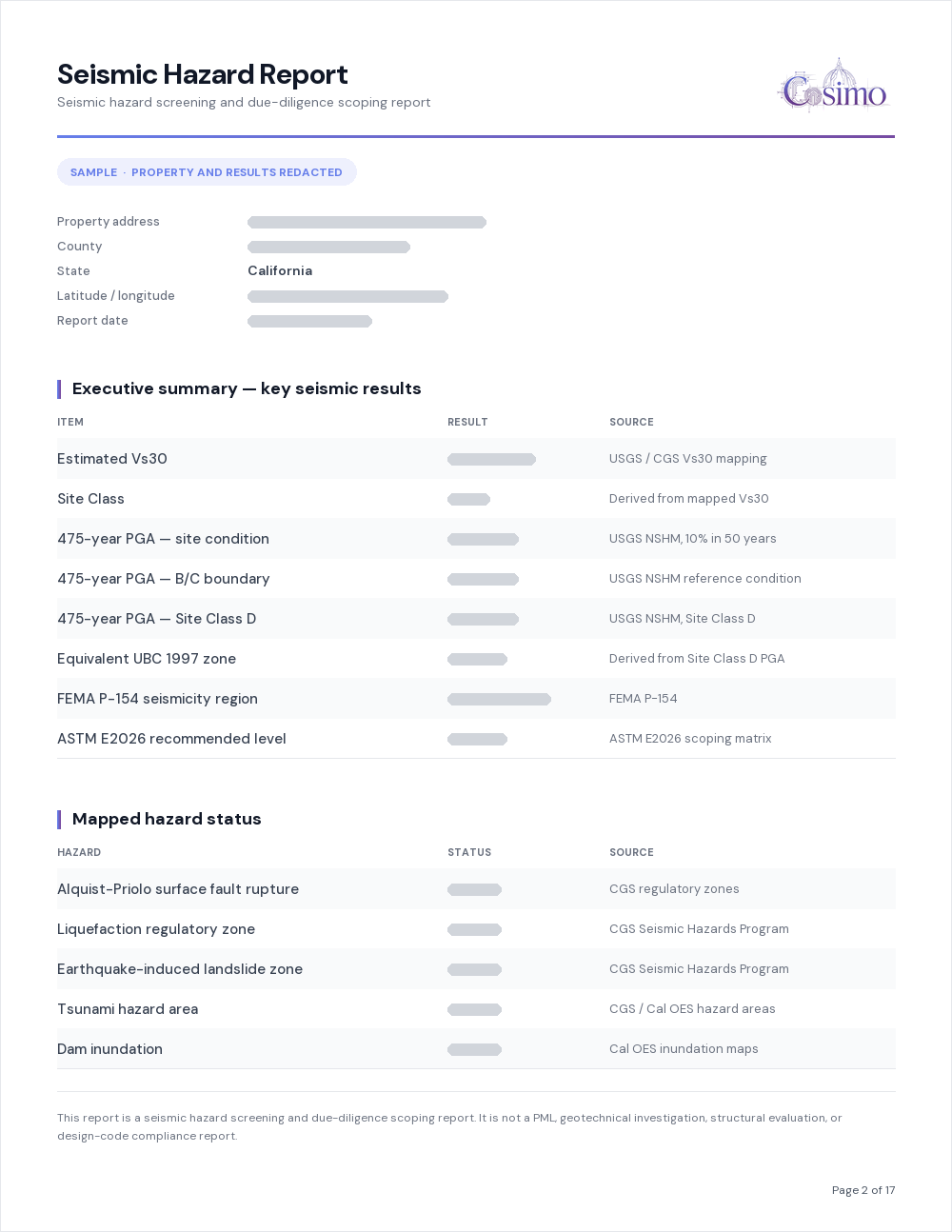
Replace the basement file cabinet with a capital asset management system of record.
Cosimo connects the record, the decisions, and the execution, so capital asset management stays current and defensible across ownership, refinancing, and capital projects.
What it replaces
- Spreadsheet trackers
- Static PDF condition reports
- Yardi and MRI exports
- Shared drives and email threads
- Re-surveying the same building
Cosimo
- Ledger system of record
- AI-powered intelligence
- Proactive insights
- Centralized platform
- Instant access
See it against one of your buildings.
We will walk through a property record with you.